


How to Check Your Coolant Freeze Level to Avoid Winter Freeze Damage
- fryejs91
- Jan 27
- 3 min read

Winter can be tough on your vehicle, especially when temperatures drop below freezing. One of the most common causes of engine trouble in cold weather is frozen coolant. When coolant freezes, it expands and can cause serious damage to your engine block, radiator, and hoses. Knowing how to check your coolant freeze level is essential to protect your car and avoid costly repairs.

Why Checking Coolant Freeze Level Matters
Coolant, also known as antifreeze, is a mixture of water and chemicals designed to regulate engine temperature. It prevents the engine from overheating in summer and freezing in winter. The freeze level indicates the lowest temperature at which the coolant will remain liquid. If your coolant freeze level is too high, it means the coolant can freeze at temperatures common in winter, risking engine damage.
Failing to check and maintain the right freeze level can lead to:
Cracked engine blocks or cylinder heads
Burst radiator hoses
Reduced heater performance inside the car
Engine overheating once the ice thaws
Checking your coolant freeze level before winter arrives ensures your vehicle stays protected during cold snaps.
Tools You Need to Check Coolant Freeze Level
You don’t need expensive equipment to check your coolant freeze level. Here are the basic tools:
Coolant tester or hydrometer: This device measures the freezing point of your coolant.
Clean cloth or rag: To wipe off the radiator cap or reservoir.
Gloves and safety glasses: Coolant is toxic and can irritate skin and eyes.
Owner’s manual: To locate the coolant reservoir and understand your vehicle’s specifications.
A coolant tester is inexpensive and available at most auto parts stores. It provides a quick and accurate reading of your coolant’s freeze protection.
Step-by-Step Guide to Checking Coolant Freeze Level
Follow these steps carefully to check your coolant freeze level safely:
Ensure the engine is cool
Never open the radiator cap or coolant reservoir when the engine is hot. Hot coolant can spray out and cause burns.
Locate the coolant reservoir or radiator cap
Your owner’s manual will show where to find these. Most modern cars have a translucent plastic reservoir with level markings.
Clean the area around the cap
Use a cloth to wipe dirt and debris to avoid contamination.
Remove the radiator cap or open the reservoir
Turn the cap slowly to release any pressure before fully removing it.
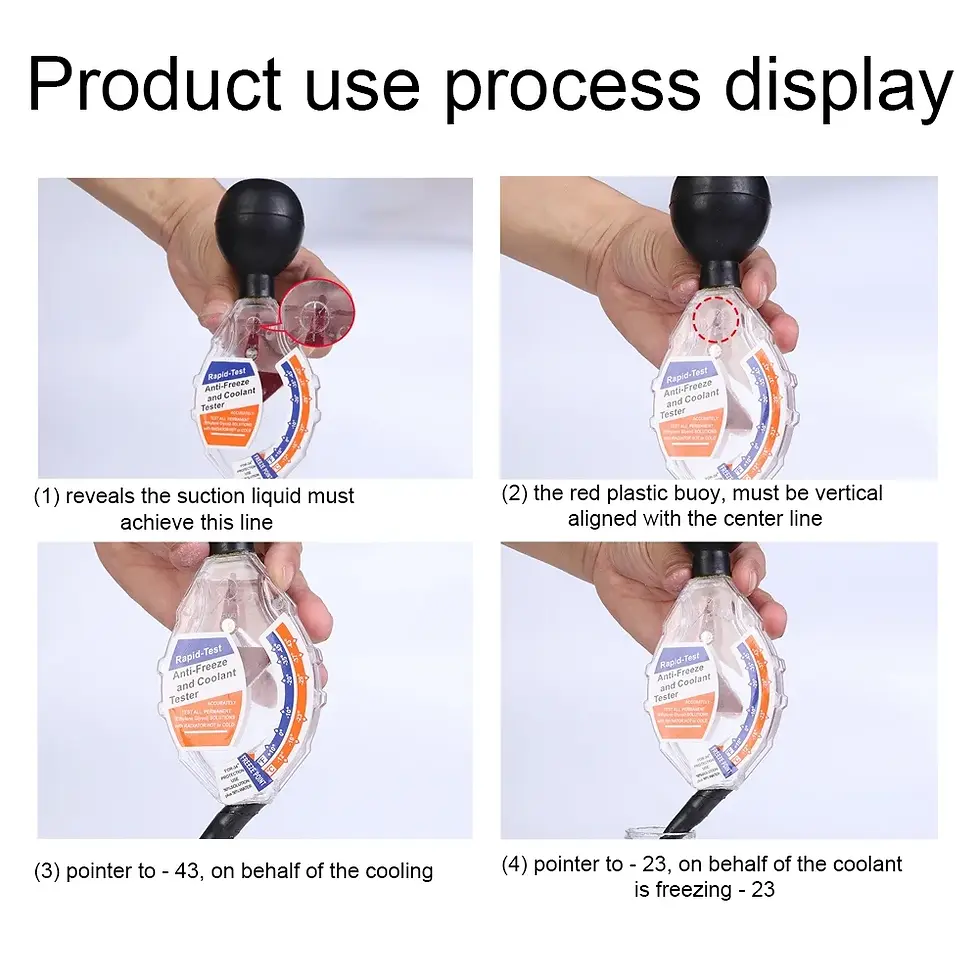
Use the coolant tester
Insert the tester’s suction bulb into the coolant and draw up a sample. The hydrometer or antifreeze tester will show the freeze point temperature.
Read the freeze level
The tester usually has color-coded zones or a scale indicating the freeze protection temperature. For example, a reading of -34°F (-37°C) means your coolant can withstand very cold temperatures.
Top up or replace coolant if needed
If the freeze level is too high (e.g., above -20°F / -29°C in cold climates), add the correct mix of antifreeze and water or replace the coolant entirely.
Understanding Coolant Mixtures and Freeze Levels
Coolant is typically a 50/50 mix of antifreeze and water, which protects down to about -34°F (-37°C). Adjusting this ratio changes the freeze level:
60% antifreeze / 40% water: Protects to about -62°F (-52°C)
40% antifreeze / 60% water: Protects to about -12°F (-24°C)
Pure antifreeze does not cool the engine well and can cause overheating, so never use it undiluted. Use distilled water to avoid mineral buildup.
Signs Your Coolant Freeze Level Might Be Too High
If you notice any of these signs, check your coolant freeze level immediately:
Engine temperature gauge fluctuates abnormally in cold weather
Heater inside the car is not blowing warm air
Visible coolant leaks or puddles under the car
White steam or smoke from the engine area
Ignoring these signs can lead to frozen coolant and engine damage.
Tips to Maintain Proper Coolant Freeze Level
Check coolant freeze level twice a year: Before winter and before summer.
Use the right type of coolant: Consult your owner’s manual for recommended antifreeze types.
Flush and replace coolant every 2-4 years: Old coolant loses its protective properties.
Inspect hoses and radiator for leaks: Leaks can lower coolant levels and freeze protection.
Keep coolant reservoir capped tightly: Prevents contamination and evaporation.
Final Thoughts on Preventing Winter Freeze Damage
Checking your coolant freeze level is a simple but crucial step to protect your vehicle during winter. Using a coolant tester, understanding the right antifreeze mixture, and maintaining your cooling system can prevent costly engine damage caused by freezing. Take a few minutes to check your coolant before the cold weather hits, and you’ll save yourself from unexpected breakdowns and repairs.


Comments